
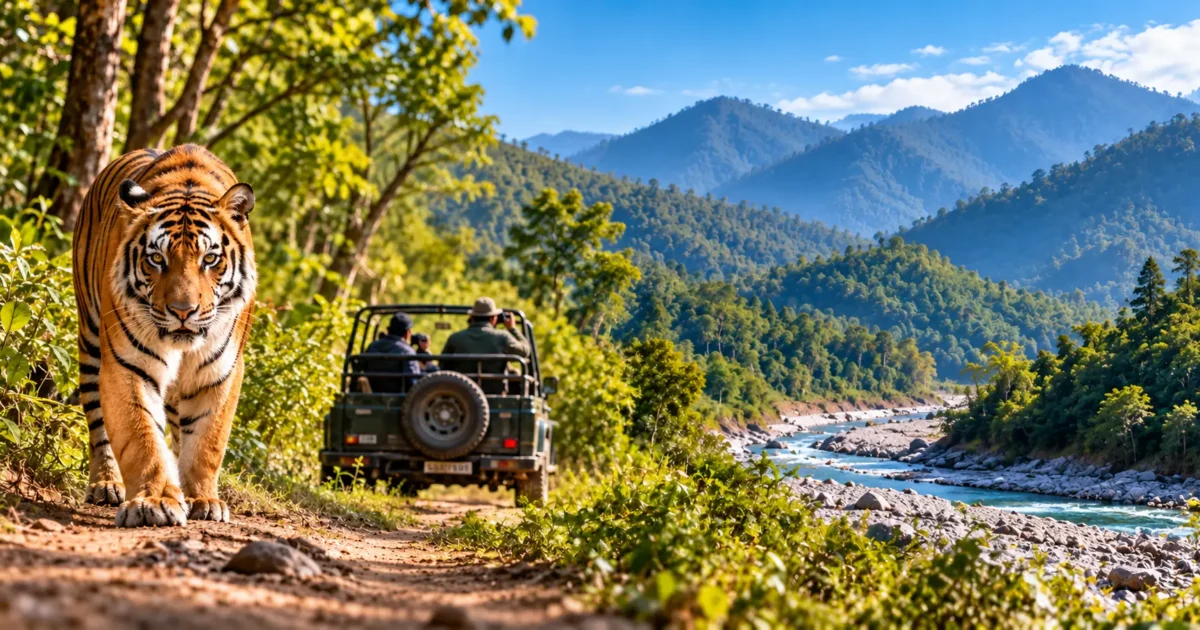
A Rajaji National Park tiger safari is one of the most rewarding wildlife trips in North India, and it is easier to plan than most people expect. If you live in Dehradun or are visiting the Doon Valley, a Rajaji tiger safari Dehradun trip puts you inside India’s 48th Tiger Reserve within a couple of hours. You get real chances of seeing elephants and leopards and, with patience and a little luck, a Bengal tiger.
This guide gives you an honest picture. It covers which zones offer the best odds, the right season, how to reach the park from Dehradun, the 2026 fees, and how to book a jeep. We have also added field tips from our naturalist guides so you arrive with realistic expectations.
Why Rajaji Is a Tiger Reserve Worth Visiting
Rajaji became a Tiger Reserve in 2015 and covers roughly 820 sq km of Shivalik foothills across Haridwar, Dehradun and Pauri Garhwal districts. Dense sal forest, Ganga riverine grassland and rocky ridges give the park a very different character from the open grasslands of central India. Tigers here are shy, forest-dwelling and spread across a large landscape. That is why a Rajaji National Park tiger safari rewards patience far more than it rewards a fixed checklist.
The reserve is home to 50+ Bengal tigers, 350 to 500 Asian elephants, 250+ leopards and 315+ bird species, based on the figures we follow. Rajaji also marks the north-western limit of the Bengal tiger’s range in India, which adds to its ecological importance. For anyone in Uttarakhand’s capital, that is a tiger habitat practically next door.
One honest note before we go further: no operator can guarantee a tiger. What a good guide can do is put you in the right zone, at the right time, in the right frame of mind. Many guests return with elephant herds, leopard signs, pugmarks and rich birdlife, and still call the trip a success. Our wildlife guide lists everything you can realistically expect to see.
Rajaji Tiger Safari Dehradun: Why Start from the Doon Valley
Dehradun is the most convenient base for many travellers. Jolly Grant Airport sits about 30 km from Chilla Gate and has daily flights from Delhi in roughly 45 minutes, so a Rajaji tiger safari Dehradun plan fits comfortably into a weekend. Road travellers from Delhi reach Dehradun in about 5 to 6 hours and can continue to the park gates the same day or the next morning.
There are three reasons the Doon Valley works well as a base.
Flexibility. From Dehradun you can reach the Haridwar-side Chilla Zone, the Rishikesh-side Motichur Zone, or the Dehradun-side Mohand Range, depending on what you want to see.
Accommodation. Dehradun has far more hotels and homestays than the villages around the gates, which suits families and larger groups. Our stay and accommodation guide helps you choose.
Value. Rajaji is less crowded and more affordable than most tiger reserves. A jeep for up to six Indian guests costs ₹2,500, which works out to about ₹567 per person with entry included when the jeep is full.
Best Zones for Tiger Sightings in Rajaji
Rajaji has five tourist zones. Tigers can turn up in any forest zone, but the zones are not equal when it comes to odds, scenery and the other wildlife you will meet along the way.
Chilla Zone (Haridwar side): the best bet
Chilla is the most popular zone and has the highest tiger and elephant sighting probability. The 42-km route follows the Ganga canal road through sal forest and grassland, and the gate is only about 15 km from Haridwar. Elephant herds of 10 to 30 are commonly seen. In the morning slot from January to May, tigers are often tracked near waterholes. For a first Rajaji National Park tiger safari, this is where we send most guests. Read the full Chilla Safari Zone guide for route and wildlife details.
Motichur Zone (Rishikesh side)
Motichur is the closest zone to Rishikesh and is best known for leopard sightings and more than 200 recorded bird species. Dense mixed forest and open grassland patches make it scenic. Tiger signs are possible, but the leopard is the star here. See the Motichur Safari Zone page for details.
Mohand Range (Dehradun side)
If you want the shortest drive from Dehradun, the Mohand Range is your zone. It is a quieter, rugged stretch of chir pine and sal forest, popular with birdwatchers hoping for the Great Hornbill. Tiger sightings here are less frequent than in Chilla, but the drive is short and the crowds are small. Check the Mohand Range safari page.
Ranipur Zone
Ranipur is the least crowded zone, with rocky Shivalik terrain, leopards and the Himalayan Goral. It suits travellers who want solitude and do not mind lower tiger odds. Details are on the Ranipur Safari Zone page.
Jhilmil Jheel
Jhilmil is a wetland zone known for the rare Barasingha (swamp deer) and about 87 migratory bird species. It is not a tiger-first zone, but it stays open until June 30, which helps if you are travelling late in the season. See the Jhilmil Jheel page.
If tigers are your top priority, choose Chilla. If you want a mix of leopards and birds, add a second safari in Motichur. Our Safari Zones overview and the blog post Chilla vs Motichur Safari will help you compare.
Best Time for a Rajaji National Park Tiger Safari
The park opens every year on 15 November and closes on 15 June, with Jhilmil Jheel staying open until 30 June. As of today the park is closed for the season, and the 2026-27 season opens on 15 November 2026. The best time for a Rajaji National Park tiger safari depends on what you value most.
Winter (15 November to February). This is the best season for weather (roughly 5°C to 22°C) and for reliable wildlife activity. Migratory birds arrive, and tiger and elephant sightings are most consistent. Book 2 to 3 weeks ahead.
Spring (March to April). Temperatures run from 18°C to 32°C. The forest is green, predators are active, and slots are easier to get. This is ideal for families.
Pre-monsoon (May to 15 June). It is hot, from 28°C to 42°C, but animals concentrate around the few remaining waterholes, so tiger sighting chances rise. Crowds are very low, which serious photographers love.
Morning or evening? The morning safari (6:00 to 9:30 AM) is usually better for predators and fills up first. The evening safari (3:00 to 6:30 PM) offers golden light and fewer vehicles. Our best time to visit guide has a month-by-month breakdown.
How to Reach Rajaji from Dehradun
Planning a Rajaji tiger safari Dehradun route is simple, because all the gates are reachable by road.
By road. Dehradun to Haridwar is roughly 55 km, and the Chilla Gate is a short drive beyond it, so allow around two hours in total. The Mohand side is much closer to Dehradun, usually about an hour’s drive. A private taxi gives you the most flexibility for the early morning start.
By air. Jolly Grant Airport is about 30 km from Chilla Gate. A taxi from the airport costs roughly ₹700 to ₹900 and takes about 45 minutes.
By train. Haridwar Junction is the nearest major railhead, 10 to 15 km from Chilla Gate. An auto or taxi from Haridwar costs about ₹150 to ₹200.
For the full breakdown, see How to Reach Rajaji National Park.
Rajaji Tiger Safari Price 2026
The main cost of a Rajaji National Park tiger safari is the jeep, which is shared across your group. Here is the current fee structure we follow.
| Item | Indian visitor | Foreign visitor |
|---|---|---|
| Park entry (per person) | ₹150 | ₹600 |
| Jeep safari (per vehicle, max 6) | ₹2,500 | ₹4,500 |
| DSLR / video camera permit | ₹200 | ₹500 |
| Mobile phone camera | Free | Free |
| Children (5 to 12 years) | 50% off entry | 50% off entry |
A certified guide accompanies every jeep. Each session lasts about 3.5 hours. Forest department rates can change, so confirm the latest figures on our ticket price page before you pay. For vehicle details, see our Jeep Safari guide.
How to Book Your Rajaji Tiger Safari Dehradun Trip
Booking is straightforward, but slots in winter fill quickly.
- Choose your dates. Winter weekends and holidays go first, so book 2 to 3 weeks ahead.
- Pick your zone. Chilla for tiger odds, Motichur for leopards, Mohand for the shortest drive from Dehradun.
- Select the slot. Morning (6:00 to 9:30 AM) or evening (3:00 to 6:30 PM).
- Share ID details. Indian visitors need a valid government photo ID (Aadhaar, Voter ID, driving licence or PAN) for every guest. Foreign tourists need a passport. Carry the originals, as IDs are re-checked at the gate.
- Confirm your jeep. Message us on WhatsApp for availability and confirmation.
You can start on the safari booking page, or read our step-by-step post on how to book a Rajaji National Park safari online.
Field Tips to Improve Your Tiger Odds
Our guides use these habits on every trip:
- Choose the morning slot. Tigers are most active at dawn, and the forest is quiet.
- Stay silent and still. Talking and sudden movement push animals deeper into cover.
- Learn alarm calls. Langur and spotted deer calls often signal a predator nearby. Your guide will tell you when to stop and wait.
- Look for signs. Pugmarks, scrapes on trees and fresh scat tell you a tiger passed recently.
- Wear muted colours. Olive, brown and grey work best. Avoid bright red and white.
- Carry binoculars. Even a basic pair helps with distant sightings and birds.
- Be patient. Sometimes the best sighting comes after 30 minutes of waiting at one waterhole.
- Do more than one safari. Two or three drives, ideally in different zones, raise your chances considerably.
Safari Rules to Follow
Rajaji is a protected area, so please follow the forest department rules. Stay inside the jeep at all times except at designated stops. Do not feed or tease animals, play loud music, or litter. Avoid single-use plastic. Follow your guide’s instructions, especially when elephants are close. These rules protect both you and the wildlife that makes the trip special.
Frequently Asked Questions
Can you see tigers on a Rajaji National Park tiger safari?
Yes, it is possible, but not guaranteed. The reserve has 50+ tigers, and Chilla Zone gives the best chance, especially on morning safaris from January to May. Many visitors see indirect signs such as pugmarks even when they miss the animal itself.
Which zone is best for tigers?
Chilla Zone is our top recommendation for tiger sightings. Motichur is better for leopards, and Mohand is the closest to Dehradun.
How much does a Rajaji tiger safari Dehradun trip cost?
The jeep costs ₹2,500 for up to six Indian guests, plus ₹150 per person entry. A full jeep works out to about ₹567 per person. Add taxi or fuel from Dehradun, plus any camera permits and meals. Foreign visitors pay ₹4,500 per jeep and ₹600 entry per person.
Is a Rajaji National Park tiger safari suitable for children?
Yes. Children aged 5 and above can join at half the entry fee. February to April is the most comfortable season for families, and children under 5 are generally not recommended on early morning drives.
What is the best month to see a tiger in Rajaji?
January to May is considered the strongest period, with May and early June giving good waterhole sightings. Check the FAQ page for more questions.
Final Thoughts
A Rajaji National Park tiger safari is about the whole forest, not just one animal. Choose the right zone, go in the right season, take a morning slot, and stay patient. If you are travelling from the Doon Valley, a well-planned Rajaji tiger safari Dehradun itinerary can deliver elephants, leopards, birds and, on a lucky day, the tiger itself.
Ready to plan? Book your Rajaji National Park safari or WhatsApp us for dates and availability.